Conscience, the Interior Sinai - Fulton J. Sheen
A powerful reflection by Fulton J. Sheen on conscience as the interior moral government that legislates, witnesses, and judges human actions.
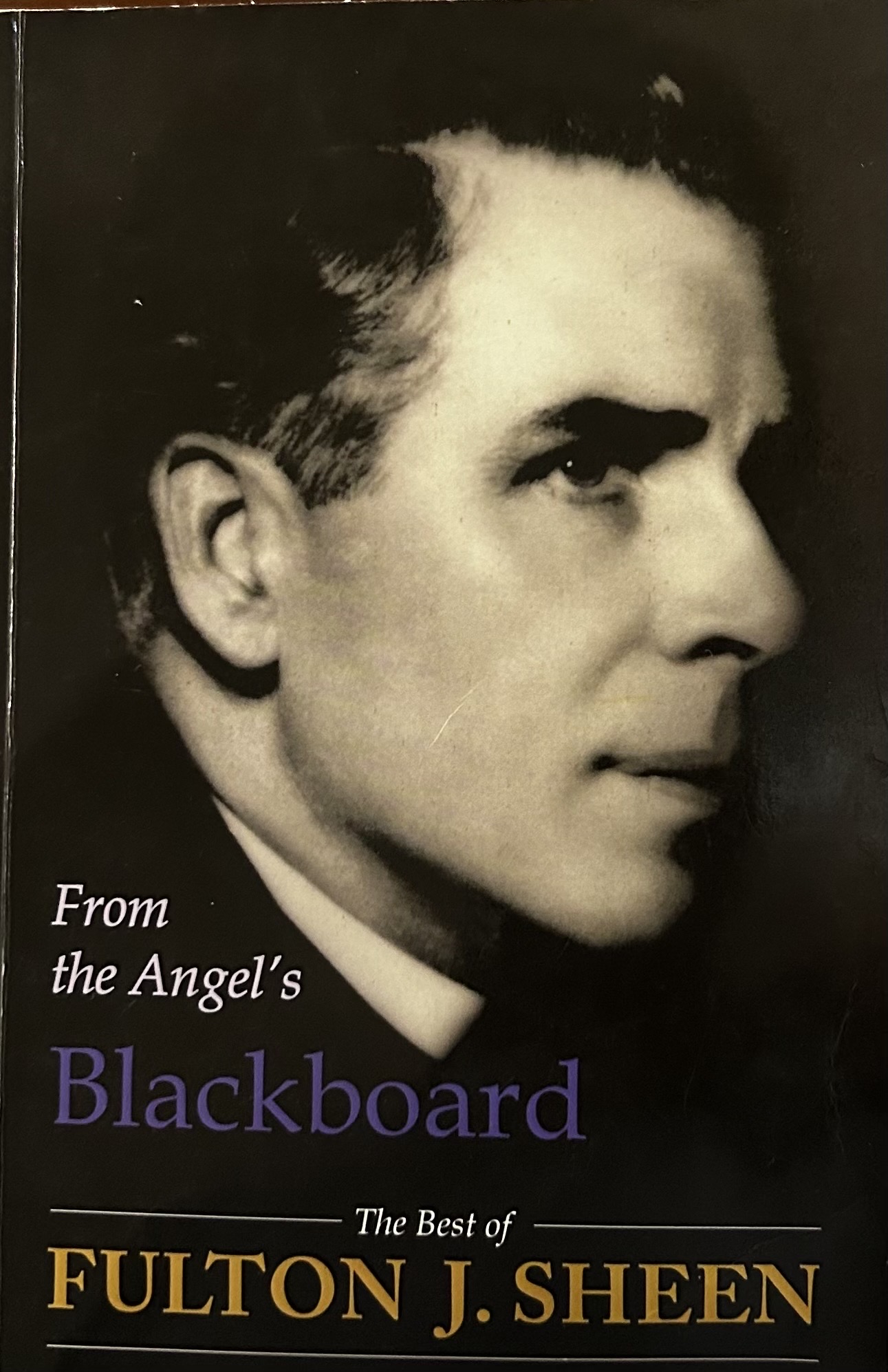
Conscience is an interior government, exercising the same functions as all human government: legislative, executive, and judicial.
It has its Congress, its President, and its Supreme Court.
It makes its laws.
It witnesses our actions in relation to those laws.
And finally, it judges us.
1️⃣ Conscience Legislates
There is in each of us an interior Sinai, from which is promulgated, amid the thunder and lightning of daily life, a law telling us:
Do good. Avoid evil.
That interior voice fills us with a sense of responsibility.
It reminds us not that we must do certain things, but that we ought to do them.
And the difference between a machine and a person is precisely this:
The difference between “must” and “ought.”
Without even being consulted, conscience pronounces some actions evil and unjust, and others moral and good.
Hence, when citizens fail to see a relationship between a human law and the law of their own conscience, they feel free to disobey and their justifying cry is:
“My conscience tells me it is wrong.”
2️⃣ Conscience Executes
Conscience not only legislates.
It also witnesses the application of the law to our actions.
An imperfect analogy may be found in civil government.
Congress passes a law.
The president approves and applies it.
In the same way, conscience witnesses the fidelity of our actions to the law.
Aided by memory it tells us:
• the value of our actions
• the influence of passion and environment
• whether our consequences were foreseen or unforeseen
It shows us, as in a mirror, the footsteps of all our actions.
And it says:
“I was there.
I saw you do it.
You had such and such an intention.”
Human justice can summon only external witnesses.
But conscience summons the one witness who cannot escape the court:
Myself.
And whether I like it or not,
I cannot lie to what it witnesses against me.
3️⃣ Conscience Judges
Conscience not only legislates and witnesses.
It judges.
The breast of every person bears a silent court of justice.
There sits the judge.
And there is no appeal, because no one can appeal a judgment he brings against himself.
That is why around the bar of conscience gather the great emotions of the moral life:
• joy
• sorrow
• peace
• remorse
• self-approval
• fear
• praise
• blame
If I do wrong, conscience fills me with guilt from which there is no escape.
For when the sanctuary of my being is assaulted by this stern voice,
I am driven out of myself by myself.
And where then can I flee?
Nowhere but to myself,
with the sickening sense of guilt and disgrace which is
the very hell of the soul.
But if conscience approves my action,
then there settles upon me,
like the quiet of evening dew,
a joy unknown to the passing pleasures of the senses.
The world may call me guilty.
Its courts may judge me criminal.
Its irons may weigh down my flesh.
But my soul builds a paradise within, against the raging opposition without,
and fills it with a peace
that the world cannot give
and the insults of the world cannot take away.
The Hidden Guilt
Many people move through the day with apparent peace of mind.
Yet at night they feel a secret fear.
Because deep within them there remains an unrequited sense of guilt.
Just as a person may appear healthy while a disease grows silently in the body,
so a person may appear upright, generous, and noble,
yet be gradually eaten away from within by hidden guilt.
That is why the ancients prayed:
“Cleanse me from my secret faults, O Lord.”
The Remedy
How can we avoid these sufferings of hidden guilt?
The spiritual masters gave a simple answer:
Nightly examination of conscience.




No comments:
Post a Comment